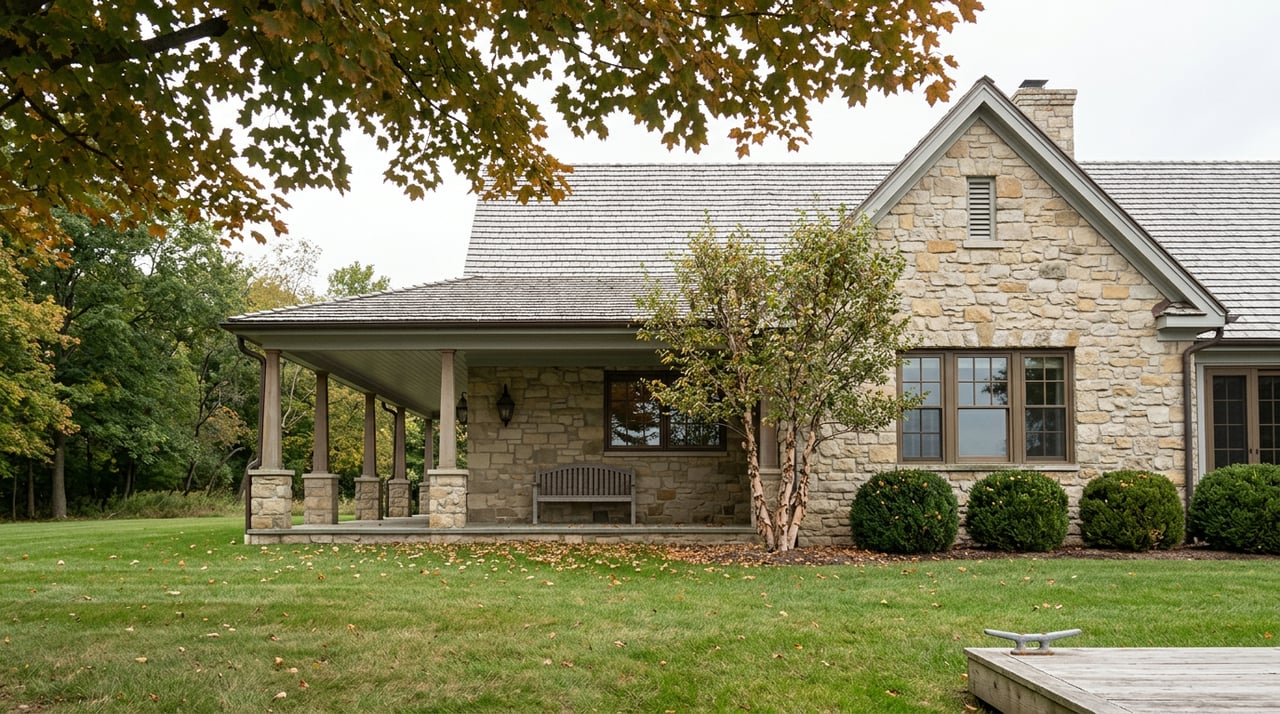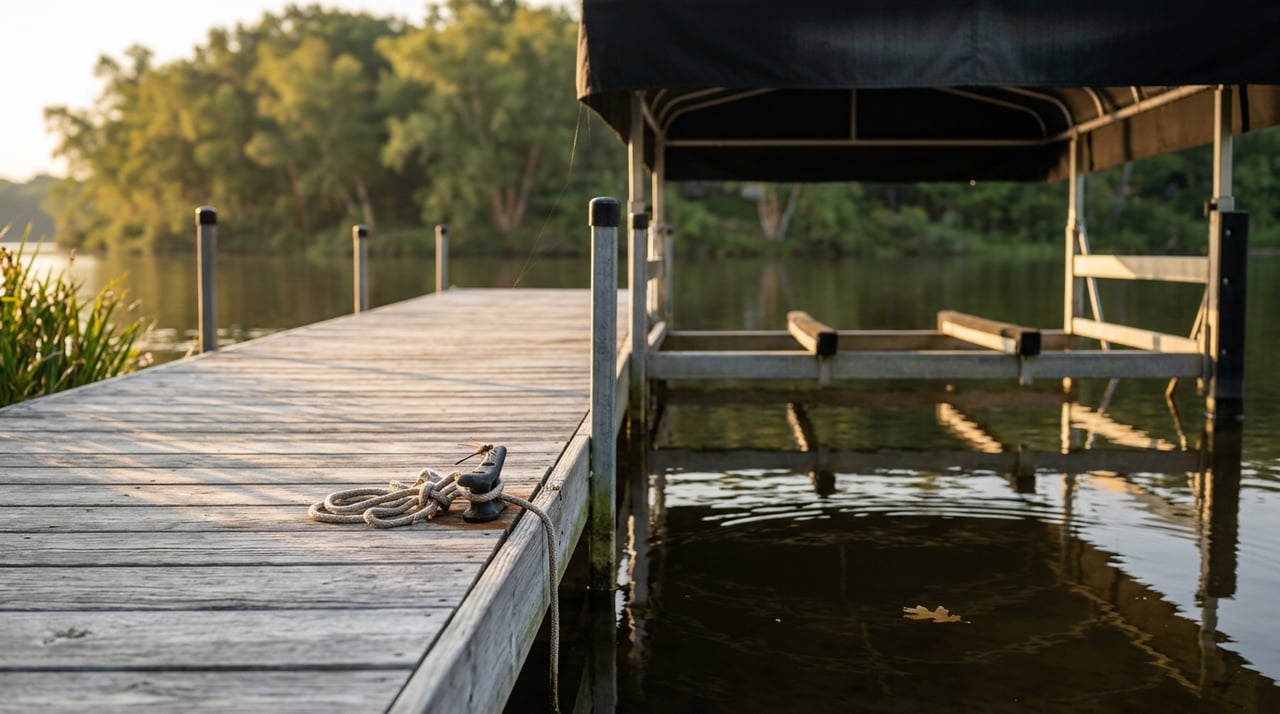
What if the dock in the listing photos isn't quite the asset it looks like?
On Geneva Lake, two piers can sit on nearly identical frontage, hold the same number of boats, and photograph the same way in a listing, yet carry completely different legal standing. The difference has nothing to do with the shoreline. It comes down to one date almost no listing mentions: April 17, 2012.
The date that splits two look-alike piers
Under Wisconsin DNR rules, a pier or wharf that was already in the water before April 17, 2012 qualifies as a legacy structure. It can keep its existing footprint and boat slip count without ever needing a state permit, even if that same configuration would not be approved if someone tried to build it today. Build a new pier now, and it has to meet the DNR's current exemption standards for size, placement, and slip count, laid out in the agency's Pier Planner, or apply for an individual permit if it doesn't fit those standards.
That means the practical question for a buyer isn't "does this property have a pier." It's "when was this pier first placed, and can anyone prove it." A four-slip pier that predates 2012 might be untouchable under today's rules. An identical-looking four-slip pier built in 2019 without the right paperwork could be a liability the day a neighbor or the DNR asks questions. The DNR's own pier guidance is explicit that only a riparian, meaning the waterfront property owner, may place a pier at all, so the chain of ownership matters as much as the pier's age.
Two governments, two sets of paperwork
Geneva Lake frontage sits inside the jurisdiction of four separate municipalities, the Town of Linn, the Village of Fontana, the City of Lake Geneva, and the Village of Williams Bay, and all four jointly established a shared pierhead line under their local boating ordinances: no pier may extend more than 100 feet waterward from the shoreline, measured from the lake's official spillway elevation. That line is codified in the Town of Linn's boating regulations, which apply the same 100-foot standard the other three lakefront governments also adopted for their own shorelines.
A DNR exemption does not end the process. The Town of Linn's ordinance requires a separate municipal permit before construction, and then a follow-up step many sellers forget about: within 90 days of completing a pier, the owner must submit an as-built survey from a certified surveyor, along with a photograph of the finished structure, to the local Building Inspector. That filing is the paper trail proving the pier was built where and how it was supposed to be. If a seller can't produce it, the DNR won't settle the question either. The agency has said plainly that it does not resolve private disputes over pier placement between neighbors, leaving that to negotiation or the courts.
That paperwork gap has real dollar value once you compare it to the alternative. In December 2025, Lake Geneva's Piers, Harbors and Lakefront Committee recommended new annual rental rates for the city's public piers, and the numbers show what it costs to rent capacity on the lake when a property doesn't carry documented riparian pier rights of its own:
| Where you keep the boat | Annual rate recommended in December 2025, City of Lake Geneva |
|---|---|
| Private riparian pier with documented permit history | No city rental fee, ordinary compliance and maintenance costs only |
| West End Pier, 24-foot slip, resident | $2,240 |
| West End Pier, 24-foot slip, non-resident | $4,693 |
| Riviera boat slip | $6,542 |
| Riviera buoy | $2,999 |
A Lake Geneva Regional News report on the proposal noted the increases still needed full City Council approval before taking effect, so current posted rates may have moved since. The direction is the point. A documented private pier is not just a lifestyle amenity. It is the thing that keeps a buyer from paying several thousand dollars a year for equivalent access somewhere else on the lake.
Who else is watching your dock
Beyond the DNR and the local municipality, Geneva Lake has two organizations that quietly shape what gets built and where. The Geneva Lake Environmental Agency, formed in 1971 as a shared agency of the Towns of Linn and Walworth, the Villages of Fontana and Williams Bay, and the City of Lake Geneva, monitors water quality and runs programs like its 2026 Clean Boats Clean Waters project at public landings around the lake. The Geneva Lake Association, organized in 1935, maintains a public log of pending DNR pier applications. As of January 2026, that log included a pier extension filing from Gage Marine, the same firm that installs the seasonal boat slips at Lake Geneva's West End Pier and city fishing pier each spring.
None of this is decorative. Wisconsin's Public Trust Doctrine, as the DNR describes it, means that when a conflict arises between a riparian owner's rights and the public's rights to navigable water, courts have held that the public's rights come first. A pier that looks fine from the water can still be the subject of a live DNR filing, a pending neighbor dispute, or a compliance question that surfaces only when someone checks.
The boathouse adds another layer
If the property includes a boathouse, there's a separate distinction to confirm: wet or dry. Wisconsin statute prohibits building a new boathouse that sits entirely or partially below the ordinary high water mark, the reference line the DNR uses to determine where its jurisdiction and a municipality's shoreland zoning begin. Existing wet boathouses may be grandfathered, but that history has to be documented the same way pier age does. A boathouse that looks charming in a listing photo can carry the same paperwork gap as an undocumented pier.
What to confirm before you write an offer
- Ask when the current pier was first placed in the water, and whether that predates April 17, 2012
- Request the as-built survey and Building Inspector filing, or the local equivalent, if the pier was built more recently
- Confirm which of the four lakefront municipalities governs the parcel, since permit specifics and setback rules differ slightly between them
- Check the Geneva Lake Association's public notice log for any pending DNR filings tied to the property or its immediate neighbors
- If there's a boathouse, determine whether it's wet or dry construction and ask for any county or state certification on file
- Verify riparian status through the deed itself, since only the waterfront owner of record can place or transfer pier rights
FAQ
Do pier rights automatically transfer when I buy lakefront property? Riparian status transfers with the deed, since only the waterfront owner can place a pier. But the pier's legal capacity, meaning how many slips it can hold under current rules, depends on documented history. That history doesn't automatically follow the sale unless it's been filed and preserved.
What happens if the seller can't produce permit documentation? It doesn't necessarily mean the pier is illegal. Many legacy piers predate any formal state permitting system and are exempt by virtue of their age alone. But without documentation, a buyer is relying on the seller's word rather than a filed record, which is a harder position to be in if a dispute or DNR inquiry comes up later.
Can I add a boat slip if my current frontage has none? Possibly, depending on shoreline length and whether the addition fits within the DNR's current exemption standards or requires an individual permit. The Pier Planner tool walks through the calculation, but the answer depends on frontage width and neighboring property lines, so it's worth confirming before assuming the lake will accommodate more capacity than it currently holds.
Pier rights on Geneva Lake are rarely obvious from the shoreline. They live in deed records, DNR files, and municipal building inspector archives, and the gap between what a pier looks like and what it's actually permitted to do is exactly where a purchase can stall or a value assumption can go wrong. If you're evaluating a lakefront property and want someone who knows which records to pull before you're under contract, Linda Tongé has spent decades working through exactly this kind of Geneva Lake due diligence. Schedule a consultation before you write the offer, not after.