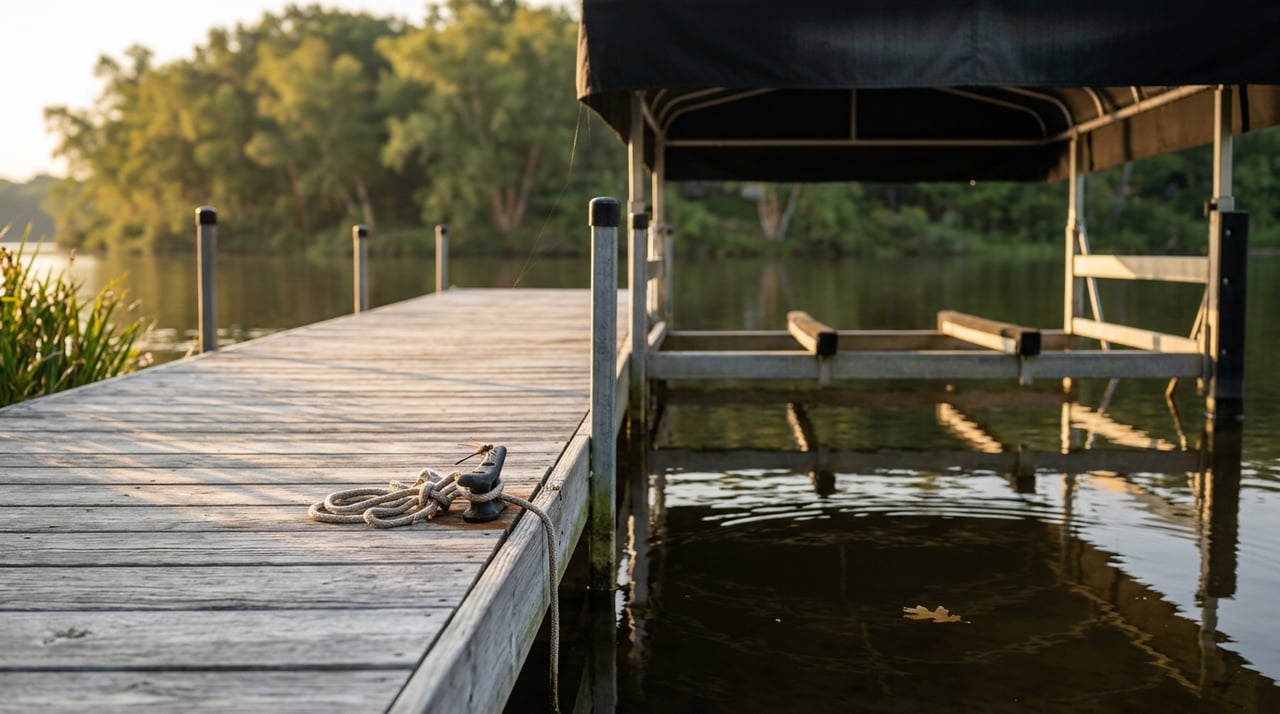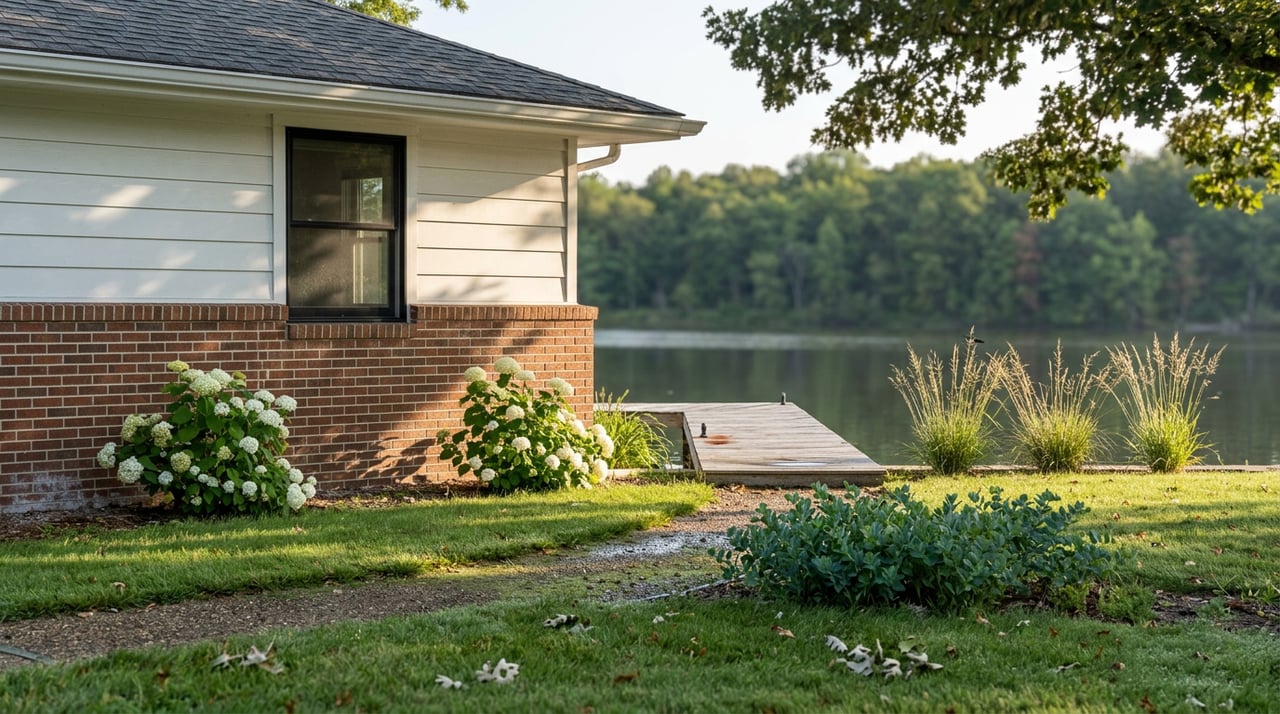
A buyer we've talked with this year fell for a Twin Lakes photo before they fell for the house. The listing said "lake access," the price sat right in line with what they'd budgeted, and the agent on the other end mentioned a private beach and a pier. It wasn't until the title work and the association bylaws showed up during due diligence that the buyer learned the home didn't touch the water at all. The frontage belonged to a property owners association a few lots away, and the pier privileges came with a waitlist, not a deed.
That gap between what a listing implies and what a title actually conveys is the single most useful thing to understand before shopping Twin Lakes. It also explains something odd sitting in plain sight in the current data: the numbers for "waterfront" and "everything else" in Twin Lakes look almost identical. That's not because water access is cheap here. It's because the word "waterfront" is doing far more work than the price tag admits.
Three Words, Three Very Different Deeds
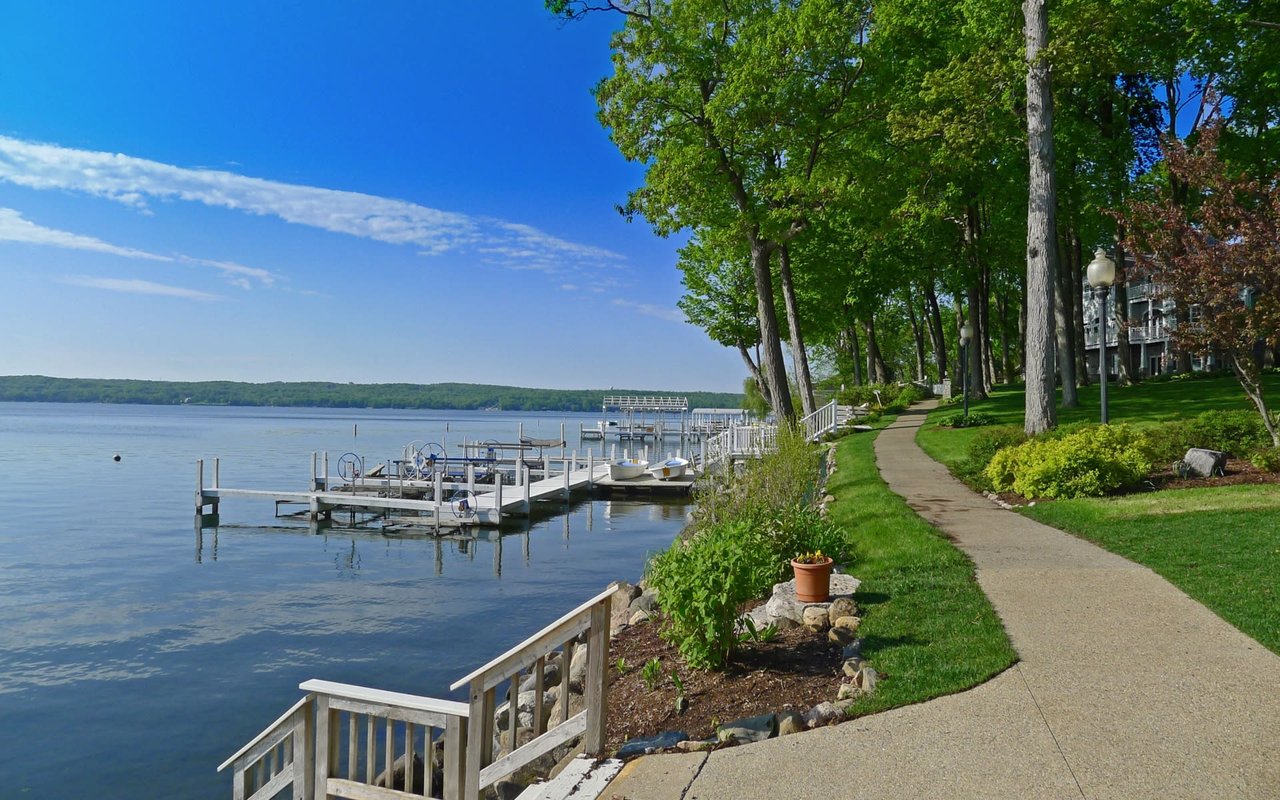
Search current Twin Lakes inventory and you'll run into language like "lakefront lake access to Spring-Fed 725-ac Lake Elizabeth via Blackhawk Trails Assoc (apply for a boat slip)" on one listing, a duplex advertised through the Twin Lakes Manor Association with lake rights and a possible pier slip on another, and a property marketed around its membership in the Edgewater Park Property Owners Association, which grants a lakeside park, pavilion, and pier rather than any frontage on the parcel itself. None of these homes touch the water. All of them are marketed using water-adjacent language that a buyer scanning listings on a phone can easily read as equivalent to true frontage.
One current listing put the contrast into words better than any broker could: it advertised deeded lake rights and a possible pier slip through an association, closing with the line that you can "enjoy lake life without the waterfront price." That's an honest pitch, and it's also the whole thesis of this piece. The homes carrying that pitch are a real and often excellent product. They are not the same product as a parcel with platted frontage, and pricing them as if they were is where buyers get burned twice: once on the purchase and again at resale, when the next buyer's lender or title company asks the same questions yours should be asking now.
The practical differences that separate these categories:
- Deeded frontage. The parcel itself includes a measured length of lake bottom or shoreline, typically expressed in feet on the plat map. Dock and pier placement rights run with the land, not with membership in anything.
- Association or HOA lake access. The homeowner belongs to a group, often named after a subdivision like Bay View or Blackhawk Trails, that collectively holds beach, pier, or slip privileges. Slip assignments are frequently subject to a waitlist, and the rules governing that access live in the association's bylaws, not the individual deed.
- Near-lake, no rights. The home sits close enough to see or walk to the water but carries no legal access beyond what's open to the general public, such as a municipal boat launch.
Why the Waterfront Median Doesn't Look Like a Premium
Here's where the numbers get interesting. As of early August 2026, active Twin Lakes listings carried a median list price of $419,450, with homes pricing at a median of $243 per square foot. Looking back over the trailing three months through late July 2026, the median sale price landed closer to $422,000, up 12.6 percent year over year, with homes moving in an average of 68 days.
Now look at the waterfront-specific slice of that same market. A late-May 2026 snapshot from a national listing tracker counted just four active waterfront homes in Twin Lakes, with a median asking price of $420,000. Practically indistinguishable from the overall market median.
If frontage carried the premium buyers assume it should, that gap should be wide open. It isn't, and the reason is structural rather than economic. True deeded frontage is scarce enough that it barely shows up in a monthly count, four listings across two lakes covering roughly a thousand acres of water. Most of what gets tagged "waterfront" in a search filter is actually the association-access tier, the Blackhawk Trails and Twin Lakes Manor type of product, priced closer to an inland home with a nice amenity bundled in. That tier is common enough to set the median. The rare true-frontage sale, when it happens, is an outlier the small sample size can't smooth out. A four-listing median tells you almost nothing about what frontage costs. It tells you what the association-access tier costs, because that's most of what's actually for sale under that label.
What the Top of the Market Actually Looks Like
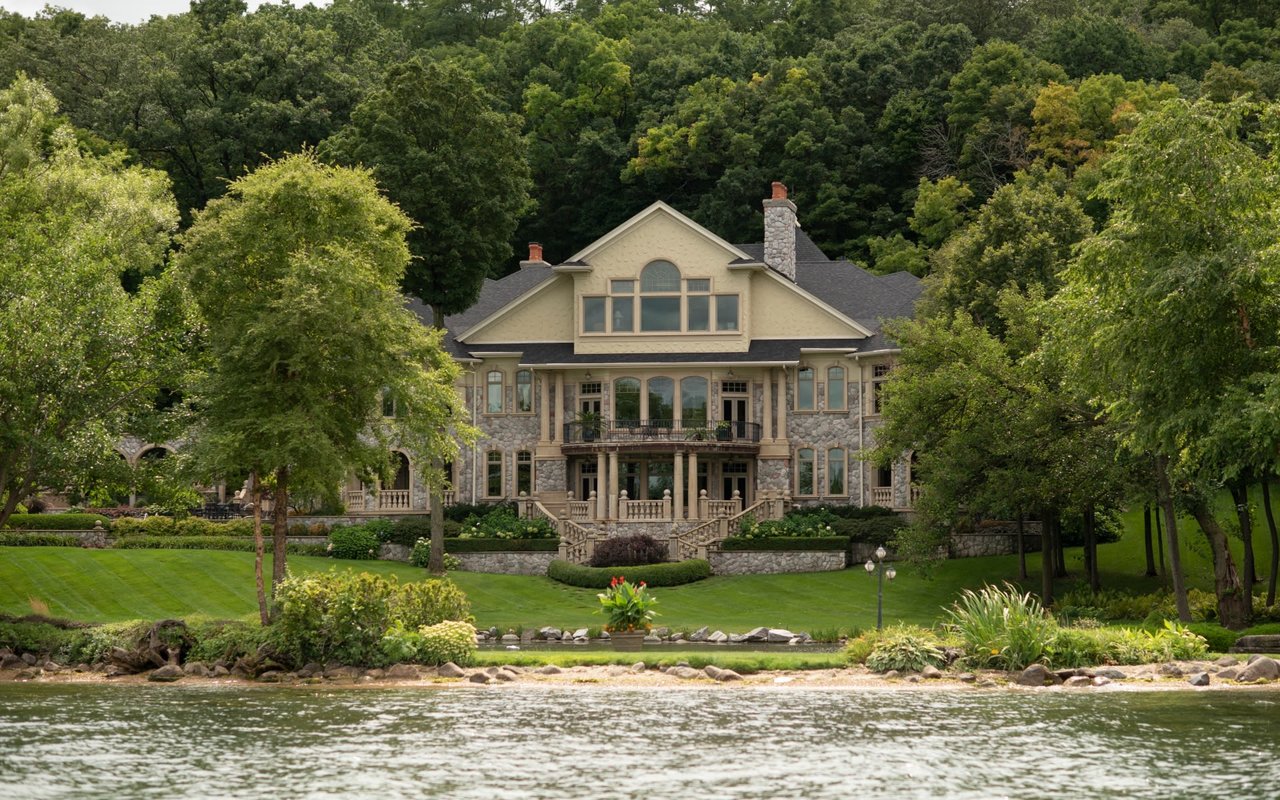
When true frontage does come up for sale, the gap becomes obvious. One recent Lake Elizabeth listing, a five-bedroom retreat designed by Chicago architect Peter Roesch, carried 68 feet of deeded frontage. Another current listing offers 101 feet of frontage on more than 1.8 wooded acres. A rare vacant lot on the market this year carries 120 feet of platted lake frontage, land alone, no structure. These are the properties that anchor what "waterfront" is supposed to mean in Twin Lakes, and they sit well above the modest three-bedroom association-access home advertising lake life without the waterfront price.
The takeaway for a buyer comparing neighborhoods isn't that association access is a lesser choice. For many weekend and full-time residents it's the right fit, lower carrying cost, real beach and pier privileges, a built-in community. The point is that the median price you see on a portal search is quietly blending both products together, and the only way to know which one you're actually pricing is to ask the question directly rather than trust the listing headline.
Before You Write the Offer
| Question to confirm | Deeded frontage | Association access |
|---|---|---|
| Does frontage footage appear on the plat map? | Yes, measured in feet | No, parcel has no footage |
| Who controls dock or pier placement? | The property owner | The association's bylaws |
| Is boat slip assignment guaranteed? | Not applicable, owner's shoreline | Often a waitlist position |
| Can access rights be revoked or changed? | Rarely, tied to the deed | Possible if bylaws change |
A few things worth confirming before you're under contract, regardless of which tier you're looking at:
- Ask whether the frontage is deeded to the parcel or granted through membership in a named association, and get the association's governing documents in writing.
- If a boat slip is part of the pitch, ask for your position on the waitlist and whether that position transfers to a new owner or resets.
- Request the plat map showing platted frontage footage rather than relying on a listing description alone.
- Ask what happens to lake rights if the association's rules or dues structure changes, since that risk sits with the buyer, not the seller.
A Couple of Questions Worth Asking Early
Does "lake rights" mean the same thing as "lakefront"? Not necessarily. Lake rights usually describe access granted through an association, such as a beach, pier, or the ability to apply for a boat slip. Lakefront describes frontage that belongs to the parcel itself. Both appear in Twin Lakes listings, often in language similar enough to require a direct question to the listing agent.
Does an association-access home resell as well as true frontage? It resells differently rather than worse. It appeals to a buyer who wants lake life without carrying the cost and maintenance of frontage, and that buyer pool is real and active in Twin Lakes. Pricing and marketing it correctly, rather than blurring it into the waterfront category, is what protects value at resale.
Twin Lakes rewards a buyer who reads past the listing headline, and it punishes one who doesn't find out which product they bought until the title work is already done. If you're comparing Elizabeth Lake, Lake Mary, or the inland tier around them, Linda Tongé has spent decades sorting exactly this kind of distinction out for buyers before they write an offer, not after. Schedule a consultation and get the plat map read correctly the first time.