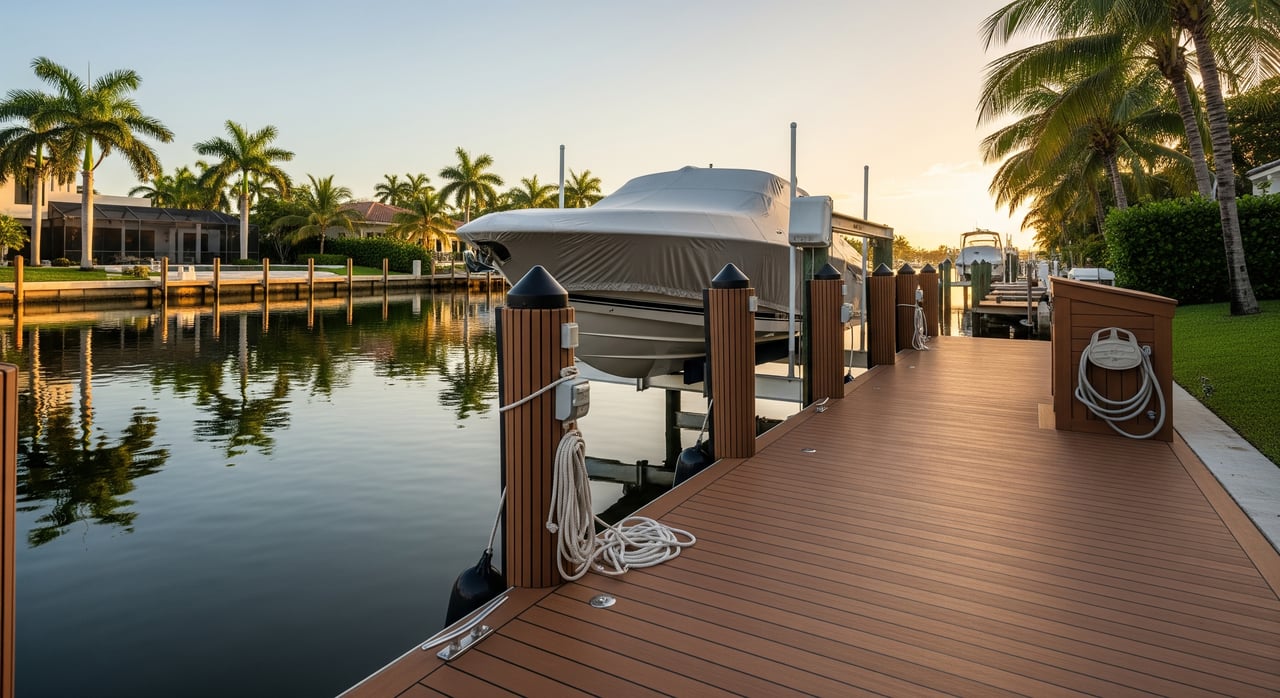
Leaving your Lauderdale Lakes dock and lift idle for a few months? In South Florida, you are not fighting ice. You are protecting against storms, corrosion, and long stretches of no use. With a simple plan, you can keep your equipment safe and ready when you return. This guide walks you through timelines, smart maintenance, and when to call a pro. Let’s dive in.
Why winterization matters here
Lauderdale Lakes sits in a mild climate where freezing is rare. Your bigger risks are salt or brackish corrosion, marine growth like algae and barnacles, summer and fall storms, and periods when no one is around to check equipment. That is why “winterization” here means service, securement, and safety.
It also means planning around the Atlantic storm calendar. Hurricane season runs from June 1 to November 30, so schedule checks before late spring. You can track seasonal outlooks and storms through the NOAA National Hurricane Center.
Plan your timeline
Annual service and inspection
Book one full service each year for your lift and dock. Spring or fall works well when weather is moderate and contractors are more available. An annual visit should include inspection, lubrication, and electrical safety checks.
Hurricane season prep
Aim to complete storm‑security steps before May or early June. Local marine contractors often book 4 to 8 weeks out as summer approaches. Get on the calendar early to avoid the rush.
If you will be away for months
If you are a seasonal or second‑home owner, schedule a check right before you leave. Decide if you will remove the boat, secure it on site, or store it offsite. If permits are needed for any structural work or removals, allow extra time because reviews can take weeks.
Methods that work in South Florida
Secure lifts and boats in place
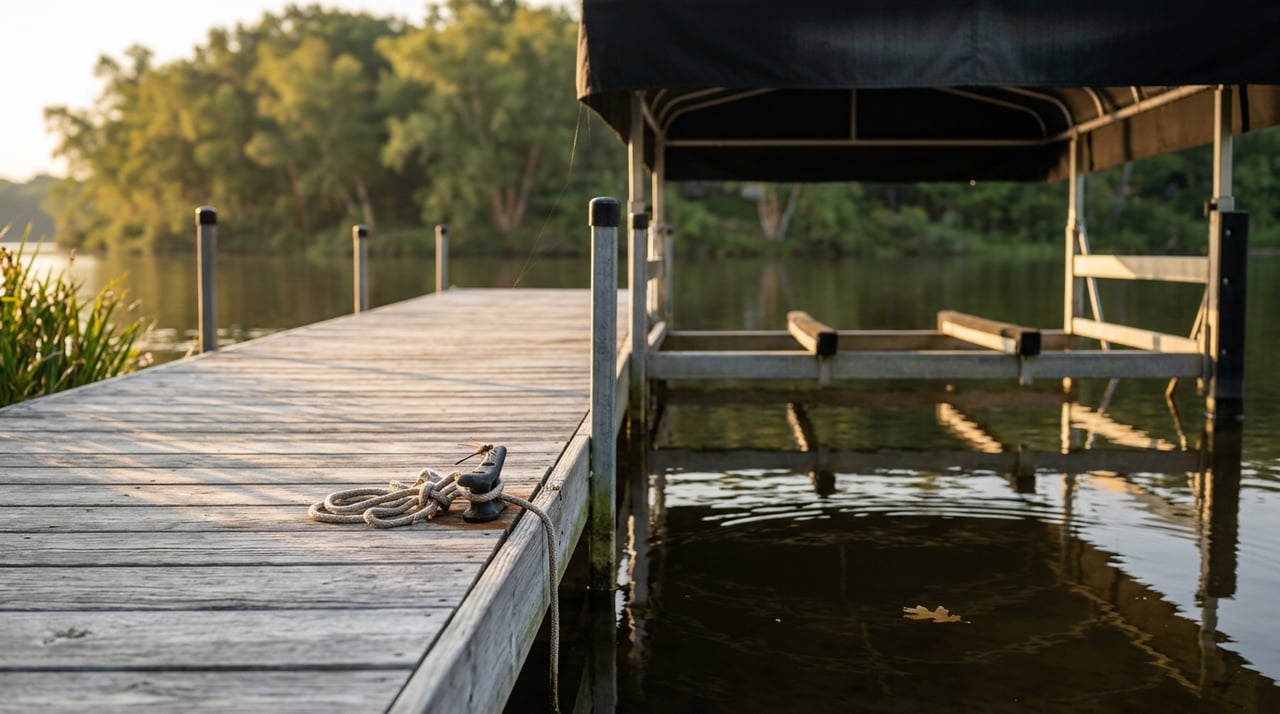
If you keep the lift on site, remove the boat or secure it with approved straps. Disconnect shore power and protect electrical panels from water. Take off canopies, cushions, and removable electronics, and lock what remains.
Pros: lower cost than full removal and quick to do. Cons: some risk remains in severe storms, depending on lift design and exposure.
Remove the boat or lift
Many owners remove the boat and store it ashore during long absences or peak storm windows. Some also remove control electronics or disconnect power to reduce risk.
Pros: reduces storm exposure and simplifies maintenance. Cons: requires hauling, storage, and sometimes permits or heavy equipment for lift components.
Mechanical maintenance basics
Ask your technician to lubricate moving parts and visually inspect cables, straps, pulleys, and winches. Check sacrificial anodes and replace if depleted. Have motors, gearboxes, and limit switches tested so everything runs smoothly when you return.
Electrical systems and batteries
Electrical safety near water is critical. Disconnect shore power when you are gone or keep it on a properly monitored GFCI circuit. Remove and store batteries in a dry place if you will be away long term. Keep enclosures sealed to prevent water intrusion.
Corrosion control and materials
Brackish or salt exposure speeds up galvanic corrosion. Replace anodes as needed, use suitable stainless hardware, and avoid mixing incompatible metals. If you are unsure about materials, ask a local marine professional for guidance.
Biofouling and cleaning
Algae and barnacles add weight and wear. Clean regularly and consider anti‑fouling options for submerged parts where allowed. For coatings and chemicals, check rules from the Florida Department of Environmental Protection before applying anything.
Permits and environmental rules
Work in and over the water is often regulated. Before you drive or remove pilings, alter docks, or disturb the bottom, confirm what you need.
- The Florida Department of Environmental Protection outlines coastal and water quality rules.
- The U.S. Army Corps of Engineers, Jacksonville District handles permits for navigable waters.
- The Florida Fish and Wildlife Conservation Commission provides guidance on protected habitats like seagrass and navigation safety.
- For practical design and stewardship tips, explore UF/IFAS Florida Sea Grant resources.
Always check local requirements before starting a project, especially if you plan removals, major repairs, or painting submerged structures.
Hire the right professional
Jobs for a technician
Bring in a pro for structural problems, major corrosion on load‑bearing parts, motor or gearbox replacements, and any complex electrical work. Full lift removals, installations, and permit‑heavy jobs also call for an expert. If you have an insurance claim, follow your insurer’s inspection and repair requirements.
How to choose safely
- Verify licensing with the Florida Department of Business & Professional Regulation.
- Ask for proof of liability insurance and workers’ compensation.
- Confirm experience with Broward County waterway conditions and permitting.
- Get a written estimate with scope, materials, timelines, and warranty terms.
- Clarify whether the contractor handles permits and inspections.
- Request references from recent local jobs.
Red flags to avoid
Be cautious if a contractor avoids written estimates, lacks proper insurance, asks for unusually large cash payments upfront, or cannot provide local references or licensing details.
Quick pre‑absence checklist
- Schedule annual lift and dock service.
- Decide on boat removal or on‑site securement.
- Disconnect shore power; confirm GFCI protection when in use.
- Remove and store batteries if you will be away long term.
- Take off canopies, cushions, and loose electronics; lock what remains.
- Inspect and replace sacrificial anodes if depleted.
- Photograph the condition for your records and insurance.
- Verify permits for any structural work or lift removals and start early.
- If you are a second‑home owner, arrange a trusted local contact to check the property and run pre‑storm steps.
Local resources for guidance
- Track storm outlooks and advisories at the NOAA National Hurricane Center.
- Review environmental rules with the Florida Department of Environmental Protection.
- Check habitat and navigation guidance via the Florida Fish and Wildlife Conservation Commission.
- See federal permit information at the U.S. Army Corps of Engineers, Jacksonville District.
- Explore best practices with UF/IFAS Florida Sea Grant.
- For general winterization tips and educational content, visit BoatUS.
- Verify contractor licenses at the Florida DBPR.
Wrap‑up
In Lauderdale Lakes, the smartest “winterization” plan is simple. Service the lift, secure or remove the boat before hurricane season, protect electrical systems, and plan ahead if you will be away. A few organized steps now prevent costly surprises later.
If you are planning a move or want trusted guidance as you transition between homes, connect with Linda Tonge for calm, concierge‑level advice.
FAQs
Do I need to remove my lift for winter in Lauderdale Lakes?
- Not for freeze protection; removal is a choice to reduce storm exposure or if you will be away long term, while many owners simply remove the boat and secure the lift.
Are bubblers needed in Lauderdale Lakes, Florida?
- Bubblers are used for ice control in cold climates and are rarely needed here; aeration for water quality is a separate system and not lift winterization.
How often should I replace lift cables and anodes in Broward County?
- Schedule an annual inspection; replace anodes when depleted and cables when wear or corrosion appears per a technician’s recommendation.
Will my homeowner insurer require specific storm‑prep steps in South Florida?
- Policies vary; review your policy and document your actions since some insurers expect certain storage or storm‑prep measures.
When should I book contractors before hurricane season in Lauderdale Lakes?
- Aim 4 to 8 weeks before your target date because demand rises in late spring and early summer.
Do I need permits for dock or lift work in Lauderdale Lakes?
- Many in‑water or structural changes require approvals; check with the Florida DEP and the U.S. Army Corps of Engineers and confirm local requirements before starting work.