If you are drawn to Delavan Lake, one of the first questions to answer is simple but important: do you want to own the shoreline, or do you want access to it? That choice shapes how you use the lake, what you maintain, and how your property rights work day to day. If you are comparing lakefront and lake-access living on Delavan Lake, this guide will help you understand the difference and ask better questions before you buy. Let’s dive in.
Delavan Lake at a glance
Delavan Lake is a 1,906-acre drainage lake in Walworth County with a maximum depth of 52 feet and a mean depth of 21 feet. The Wisconsin DNR lists four boat landings and one beach, along with a fish community that includes musky, panfish, largemouth bass, smallmouth bass, northern pike, and walleye.
Local lake organizations also frame Delavan Lake as part of a much bigger watershed, about 26,000 acres in total. That matters because life on the lake is not just about views and recreation. It is also tied to long-term lake conditions, water management, and shoreline stewardship.
The lake is part lifestyle destination and part active natural system. The DNR lists Delavan Lake as impaired for high phosphorus levels, and invasive species recorded on the lake include zebra mussels, Eurasian water-milfoil, curly-leaf pondweed, phragmites, and purple loosestrife.
Lakefront vs lake-access basics
What lakefront ownership means
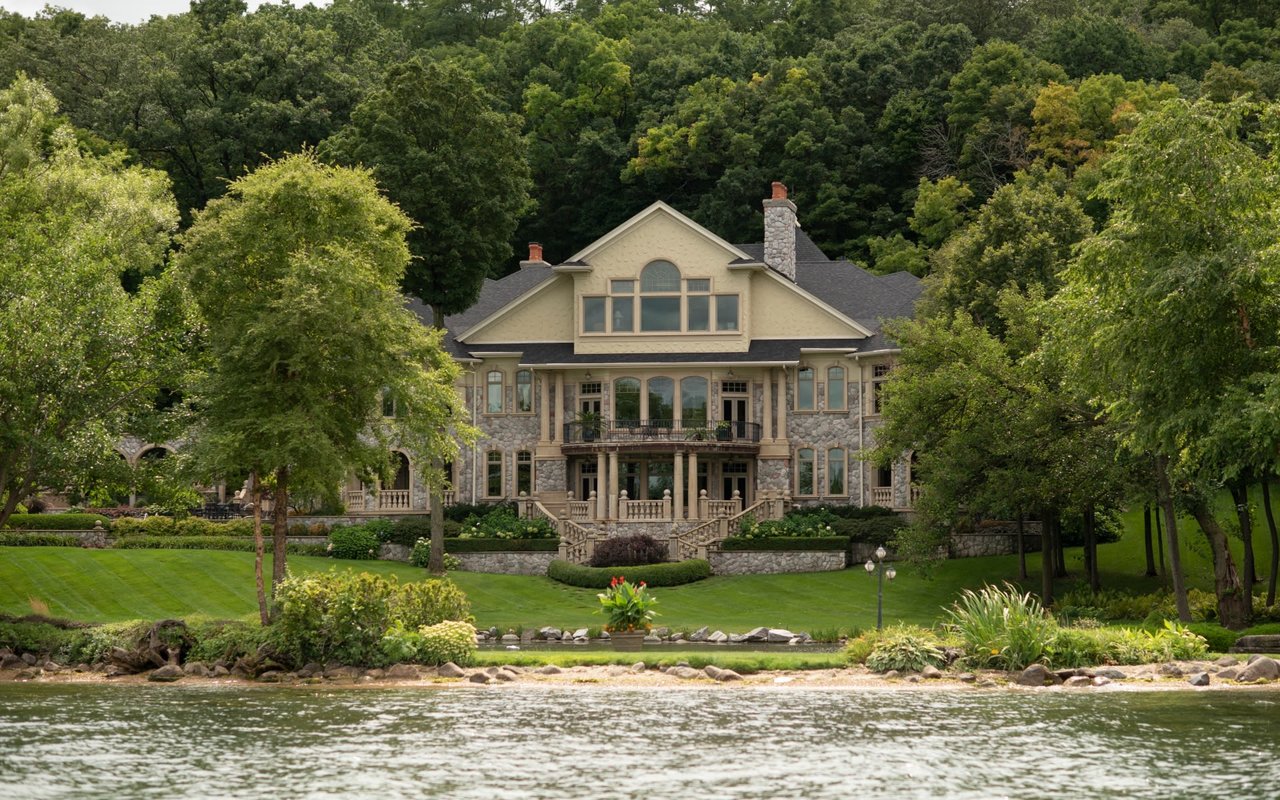
In Wisconsin, a riparian owner is a landowner whose property borders a lake or river. In practical terms, true lakefront ownership usually means your parcel has direct shoreline frontage, along with rights tied to shoreline use and access to the water.
For many buyers, that translates to more direct control over how you enter the lake, where your pier sits, and how you manage your shoreline space, subject to applicable rules and permits. It also usually means more direct responsibility for maintenance, compliance, and any shoreline-related work.
What lake-access ownership means
Lake-access ownership is different. Instead of owning the shoreline itself, you may use shared infrastructure or a separate access arrangement, such as a shared beach, launch, assigned pier space, or marina slip.
That distinction matters because shoreline rights stay with the riparian owner. On lakes, exposed shoreline is not open to public use without the owner’s consent, so access depends on a public launch, private permission, or rights created through deed or association structure.
How this plays out on Delavan Lake
Common lake-access models
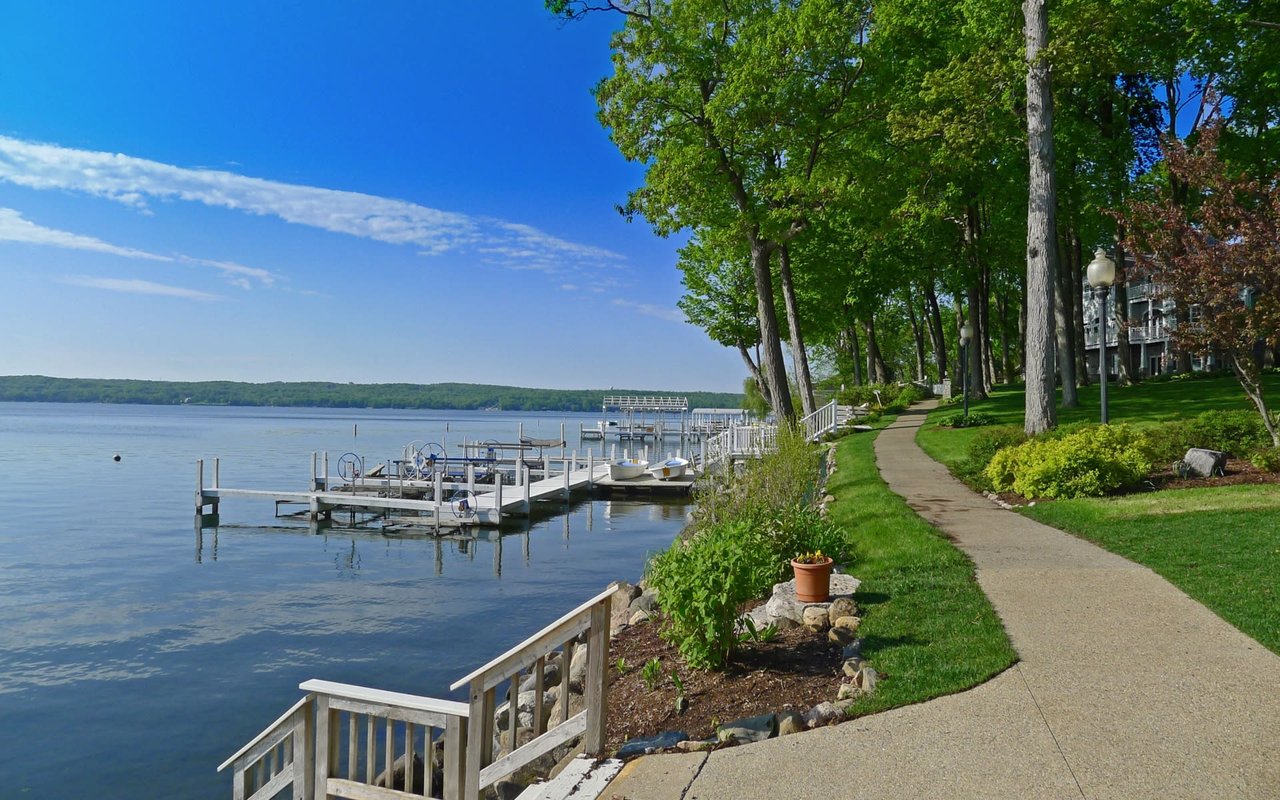
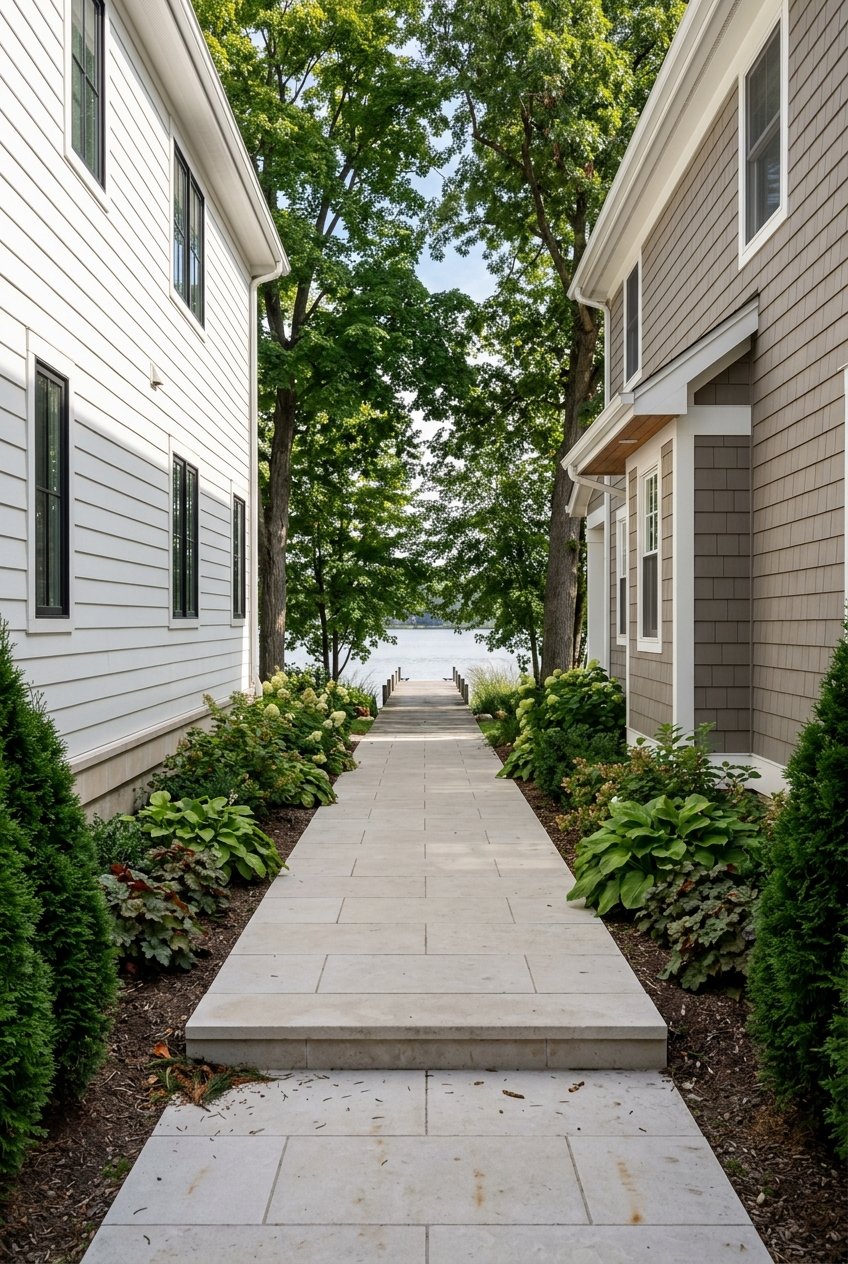
On Delavan Lake, lake-access living can take several forms. In some communities, access may center on a private beach, shared launch, swim pier, or assigned pier space rather than a privately owned waterfront lot.
View Crest Estates is one local example of this model. Its community materials describe private roads, a private beach, launch and swim piers, a key for the boat-launch lock, and assigned or leased pier space, with assessments and board rules that owners must follow.
Assembly Park reflects another version of lake-access ownership. Its community notices describe beach and launch infrastructure, assigned pier site numbers, and board-managed rules and forms tied to pier use.
Resort and marina access
A third category to understand is resort-oriented access. Lake Lawn Resort, on the northeast shore of Delavan Lake, describes roughly two miles of shoreline across 250 wooded acres, and its marina includes 261 slips within a private break-wall with slip rentals and launch access.
That setup is very different from deeded frontage or a private association beach. If you are comparing options, it helps to separate ownership of shoreline rights from use of a marina or shared facility.
What you gain with lakefront living
More direct control
The biggest advantage of lakefront ownership is usually control. You typically have direct access to the shoreline from your lot, and your boating, swimming, and dock setup may feel more immediate and private than a shared-access arrangement.
That said, direct control does not mean unlimited freedom. Shoreline features, piers, and work near the water are still regulated, and local ordinances may be more restrictive than state guidance.
A different lifestyle rhythm
Lakefront living often makes spontaneous lake time easier. If your dock is outside your back door, early morning fishing, sunset boat rides, and quick swims can feel seamless.
For some buyers, that convenience is the whole point. For others, the added maintenance and responsibility may outweigh the benefit of owning the shoreline itself.
What to expect with lake-access living
Shared amenities and shared rules
Lake-access ownership can offer a simpler entry point into the Delavan Lake lifestyle. You may still enjoy boating, swimming, and time at the lake, but through amenities managed by an association, community, or marina.
That often means there are rules, assessments, schedules, or waitlists tied to access. Your experience may depend on documents such as association rules, deed language, marina agreements, or assigned pier policies.
Less shoreline work, but more document review
If you do not own the shoreline, you may avoid some of the direct work that comes with lakefront maintenance. But in exchange, due diligence becomes even more important.
You will want to confirm exactly what comes with the property. A listing described as “lake access” may involve very different rights from one community to the next.
Docks, piers, and boat setup
Why pier details matter
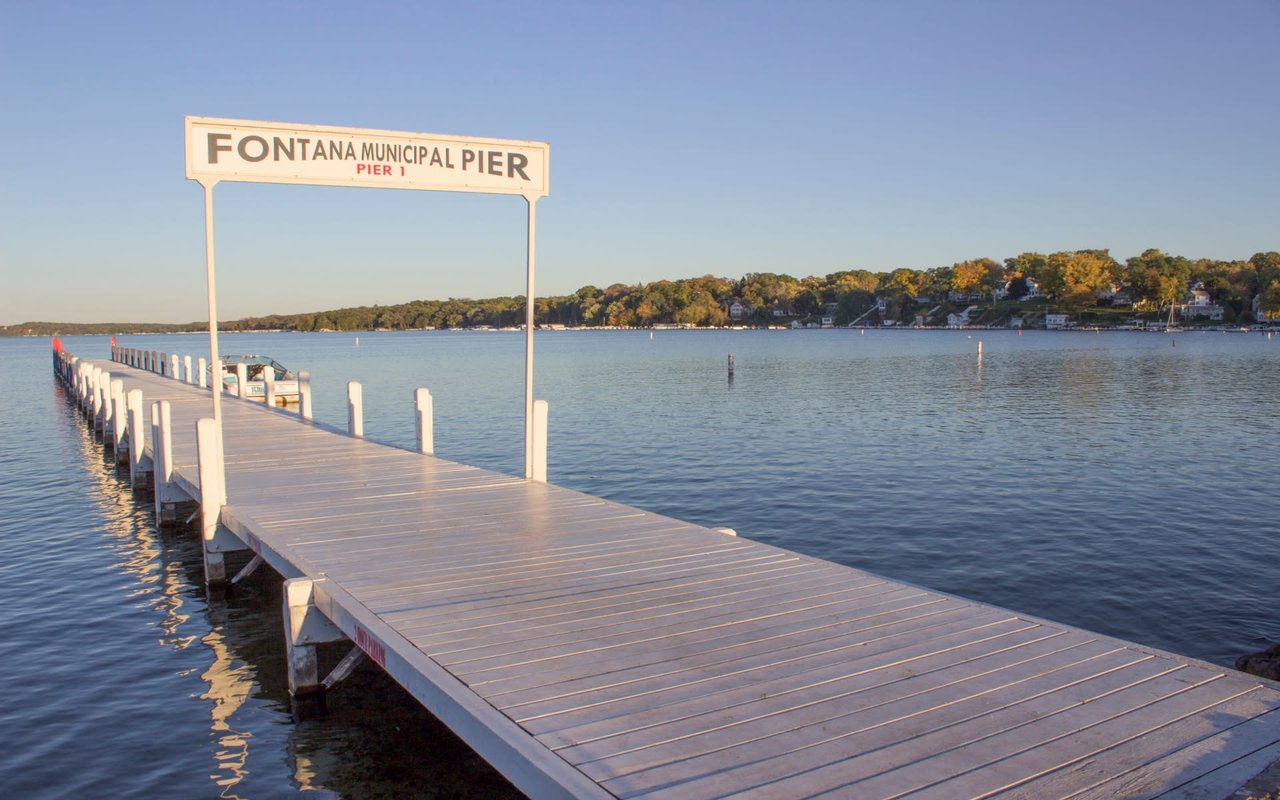
On Delavan Lake, dock and pier expectations can shape your decision as much as the house itself. A new non-commercial pier can generally support up to two boat slips for the first 50 feet of shoreline, with one additional slip for each additional full 50 feet, though local ordinances may be more restrictive.
For buyers, that means shoreline width can affect what is realistically possible. It also means you should not assume an existing setup automatically reflects what could be expanded, rebuilt, or modified later.
Questions to ask before buying
Before you move forward on any lakefront or lake-access property, ask questions like these:
- Is the dock part of the deed, an association right, a lease, or a seasonal assignment?
- Is pier space guaranteed, assigned annually, or subject to a waitlist?
- Who maintains the beach, launch, or pier structure?
- Are there dues, assessments, or marina contracts tied to access?
- Does the lot have enough shoreline to support the boat setup you want?
These details can have a big effect on both lifestyle and long-term value.
Shoreline rules and maintenance
Permits and restrictions
Lakefront ownership brings more direct exposure to shoreline regulations. The Wisconsin DNR notes that hand removal of debris or invasive plants generally does not require a permit, but mechanized vegetation clearing, dredging, herbicide use, and many beach or shore modifications often do.
The DNR also notes that even when water levels are low, permit requirements still apply if work affects the lakebed below the ordinary high water mark. New wet boathouses below that line are prohibited except under narrow certification rules.
Walworth County zoning matters
Buyers should also keep Walworth County shoreland zoning in mind. County shoreland zoning applies to unincorporated land within 1,000 feet of a lake, which is why surveys, setbacks, and permit history matter when evaluating shoreline features.
In other words, do not assume a deck, stairway, retaining wall, or shoreline improvement is fully compliant just because it is already there. Review matters.
Water quality and lake stewardship
A lake worth understanding
Delavan Lake offers a strong recreational draw, but it also has active water-quality issues buyers should understand. The DNR lists the lake as impaired for high phosphorus, and historical assessments note excess algal growth.
Recent local monitoring from the Delavan Lake Sanitary District reported an 18-foot Secchi depth on April 30, 2026, with a lake level of 927.93. That level was noted as near the district’s summer normal of 927.86 and the DNR’s optimal level of 927.89.
Why upkeep is part of ownership
Invasive species are part of the ownership picture here. The DNR inventory documents zebra mussels and multiple aquatic nuisance species, and local district materials discuss weed growth along shorelines and around docks, including limits on hand removal and situations where an NR 107 permit may be needed.
Whether you own lakefront or use shared access, stewardship is part of living on Delavan Lake. Understanding the lake helps you make a smarter and more realistic purchase decision.
Public access and private access
They are not the same thing
Delavan Lake does have public access, but it is managed access, not unlimited casual access. The DNR lists four boat landings, and the Town of Delavan describes a seasonal public park, beach, and launch system with local rules.
That can be useful if you do not own waterfront. But it is not the same as having deeded frontage, a guaranteed private launch arrangement, or a dedicated pier assignment through a community.
Check current rules locally
Boating rules can be more restrictive at the local level than under general state law. The DNR notes that the surest way to confirm current rules is to check signage at a public landing.
That is a practical reminder for buyers who plan to rely on public access rather than private lake rights. Convenience can vary depending on the season, the landing, and the current local rules.
Which option fits your goals?
Lakefront may fit you if
Lakefront living may be the better fit if you want:
- Direct shoreline access from your property
- More control over your day-to-day lake use
- A private dock or pier setup, where allowed
- A lifestyle centered around immediate water access
Lake-access may fit you if
Lake-access living may be the better fit if you want:
- Entry into the Delavan Lake lifestyle without owning shoreline frontage
- Shared amenities such as a beach, launch, or assigned pier space
- Less direct shoreline maintenance responsibility
- Flexibility across different ownership and marina models
Neither path is automatically better. The right fit depends on how you want to use the lake, how much responsibility you want to take on, and how clearly the access rights are documented.
If you are weighing Delavan Lake lakefront versus lake-access property, careful review can save you from costly assumptions. Working with a local advisor who understands waterfront details, community structures, and how these properties actually function on the ground can make the process much smoother. When you are ready to explore Delavan Lake with a thoughtful, high-touch approach, connect with Linda Tonge.
FAQs
What is the difference between lakefront and lake-access living on Delavan Lake?
- Lakefront ownership usually means your property directly borders the lake, while lake-access ownership usually means you use shared or separate access such as a beach, launch, pier assignment, or marina slip.
Do Delavan Lake lake-access homes come with a private dock?
- Not always. On Delavan Lake, dock access may be private, shared, assigned, leased, or subject to association rules or waitlists depending on the property.
Can you use public boat launches instead of buying Delavan Lake waterfront?
- Yes. The Wisconsin DNR lists four boat landings on Delavan Lake, but access is managed and subject to local rules and posted signage.
What should buyers review before purchasing Delavan Lake lakefront property?
- Buyers should review shoreline frontage, surveys, setbacks, permit history, pier setup, and any county or lake-related rules that affect shoreline features or use.
Are shoreline changes on Delavan Lake regulated?
- Yes. The Wisconsin DNR notes that many shoreline and lakebed activities, including mechanized vegetation clearing, dredging, herbicide use, and some beach or shore modifications, may require permits.
Are resort marina slips and deeded lake rights the same on Delavan Lake?
- No. Marina slip rentals, association access, and deeded shoreline ownership are different arrangements and should be evaluated separately.