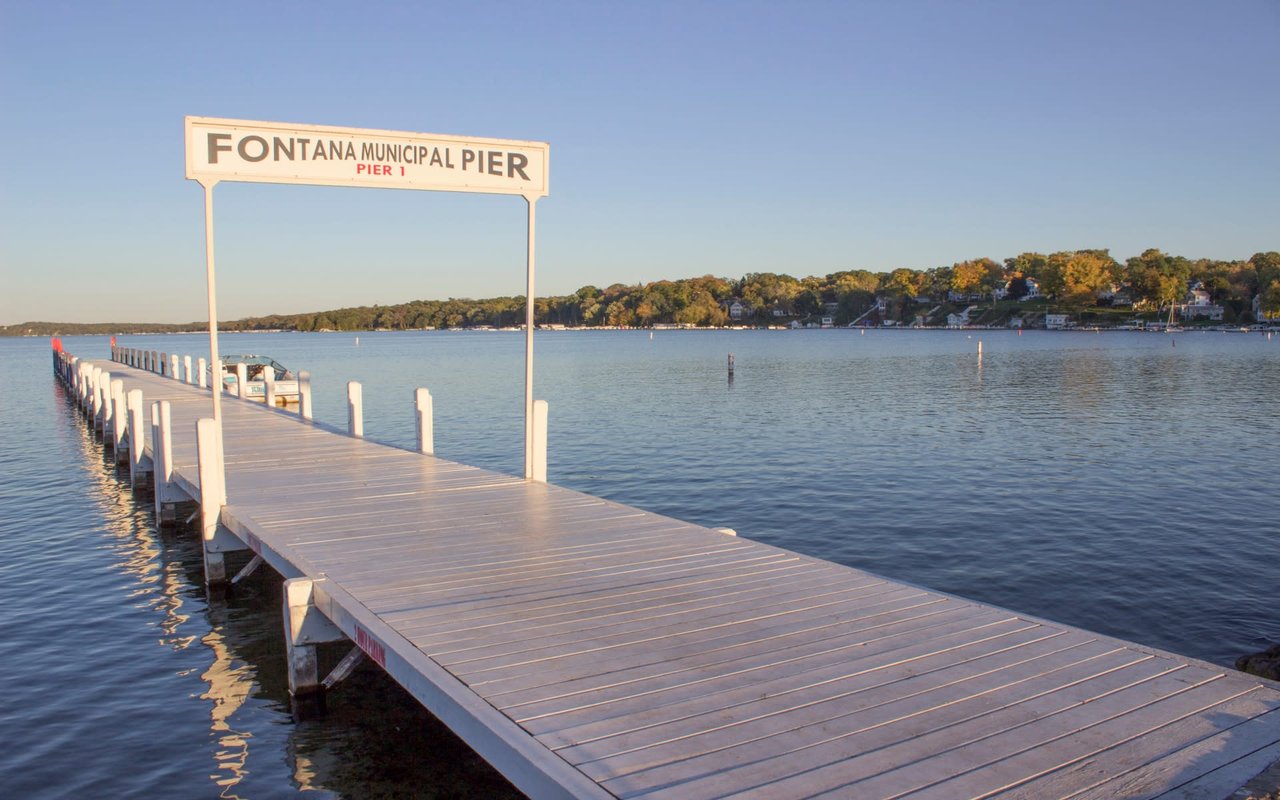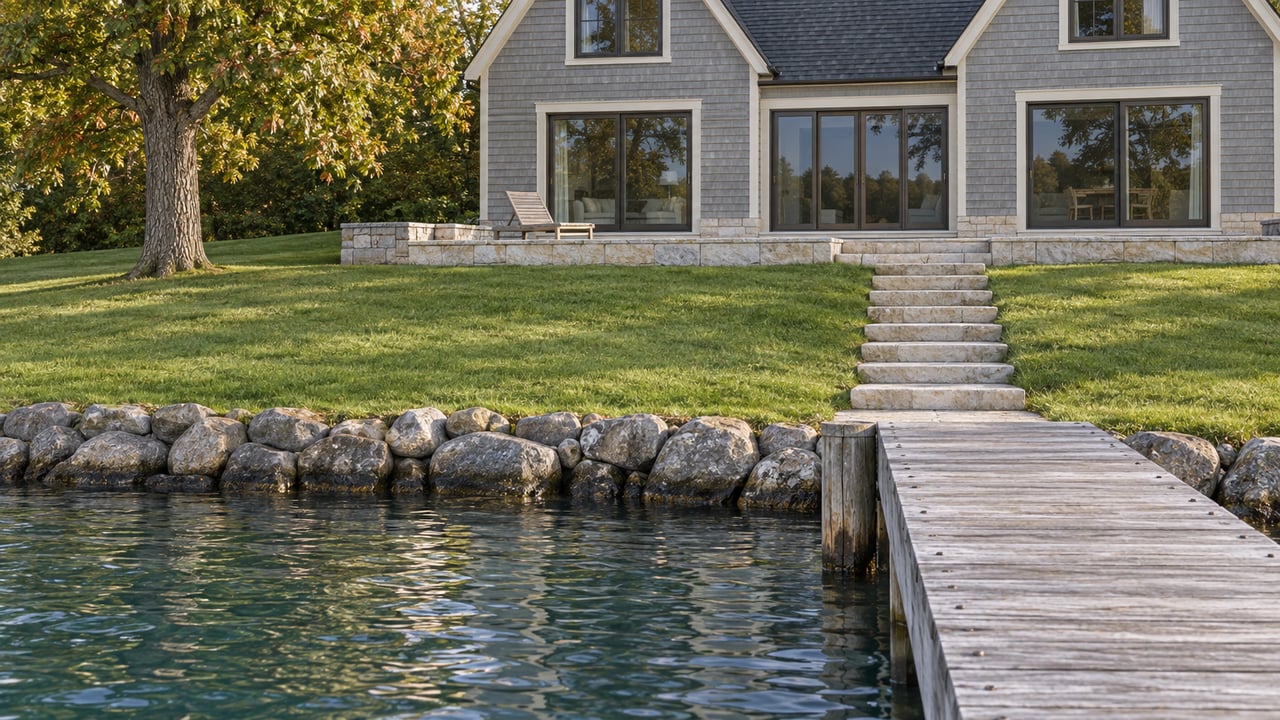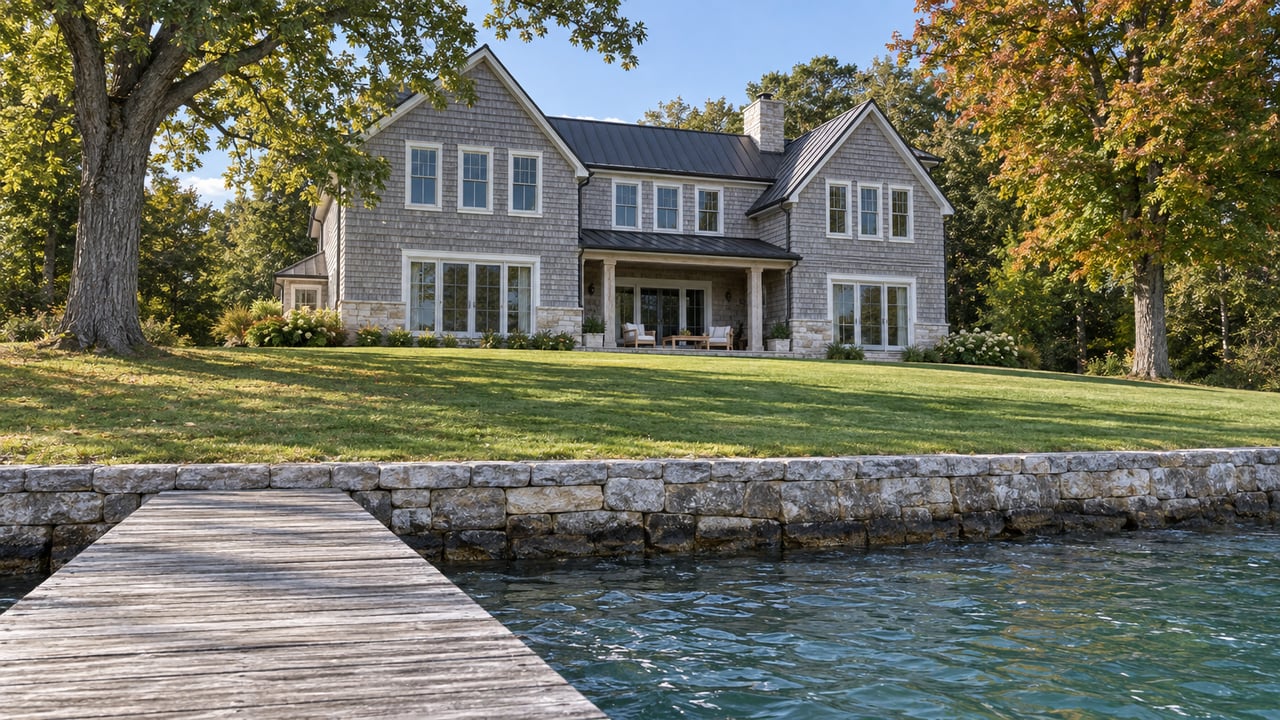
In June 2025, a Secchi disk lowered into the east basin of Geneva Lake stayed visible down to 45.9 feet. In the west basin it reached 45.6 feet. On a still morning at the end of a pier, you can see stones that used to be out of sight, and the clearest summer water in the monitoring record.
The Geneva Lake Management Plan explains where that clarity may come from. The plan was prepared by the Southeastern Wisconsin Regional Planning Commission and published in April 2026. Its explanation is less comforting than the view from the pier. The water is clearest during the same years an invasive mussel arrived. Phosphorus is building up in the deepest parts of the lake. The best fish habitat is along the stretches of shore that look least developed. To understand how the lake is doing, look at the shoreline and the deep basins more than at the clear water.
Clarity has tripled since 1988
The plan is the third comprehensive management plan for the lake, after editions in 1985 and 2008. According to an August 1, 2026 handout from the Geneva Lake Association, the Wisconsin Department of Natural Resources approved it. The partners named in the handout are the Geneva Lake Conservancy, SEWRPC, the Geneva Lake Environmental Agency, the Geneva Lake Association, the Water Alliance for Preserving Geneva Lake, Walworth County and the DNR.
Its clarity figures show how much has changed in one generation:
| Measurement | Secchi depth |
|---|---|
| 1988 average | 12.7 feet |
| 2024 average | 36.9 feet |
| June 2025, east basin | 45.9 feet |
| June 2025, west basin | 45.6 feet |
The gains show up in every month with enough data. The largest are in April, up 24 feet between 1989 and 2025, and June, up 28 feet between 1988 and 2025. Over the full record, the lake is clearest in winter readings and murkiest in August, when average clarity falls to 11.7 feet. If the water off your pier looked greener in late summer than in June, that matches the long record.
The mussel the plan cannot rule out
Zebra mussels have lived in Geneva Lake for years. Like other mussels, they filter particles out of the water. According to the plan, Geneva Lake is also the only inland lake in Wisconsin with a verified population of quagga mussels, a close relative that may affect clarity the same way.
The plan places a notable increase in clarity within the past five years, the same period in which quagga mussels were discovered in the lake, and stops short of linking the two.
"While a causal link between quagga mussels and increased clarity cannot be established at this time, continued monitoring of water clarity will be an important part of any future water quality assessments and for evaluating the impact of quagga mussels on the Lake's ecology."
The Geneva Lake Association's handout describes the quagga mussel invasion as "an area of active study" that "may have profound impacts on the lake's ecology." It notes that in the Great Lakes, the species has drastically changed the food web, affected fisheries and contributed to nuisance algae along shorelines. GLEA's 2026 Macroinvertebrate Survey found zebra and quagga mussels at all three of its sample areas. It describes the species as present around the lake on pier structures and the lake bottom. Lift a pier section this fall and you are likely to find them on it.
What collects in the deep water
Clarity is one of two main measures of a lake's condition. The other is phosphorus, the nutrient that feeds algae. Geneva Lake has been sampled for it heavily, with 2,043 samples collected between 1960 and 2025. Overall concentrations are low, with a median of 0.012 mg/l. Of the 134 samples above 0.05 mg/l, though, 130 came from water 100 feet deep or more. The plan treats that pattern as a sign of significant internal loading, meaning phosphorus that recycles from the lake bottom. GLEA restarted phosphorus monitoring in the eastern part of the lake in spring 2025, after a gap that began in 2014.
The handout sums up the lake's water quality as "generally good" but calls rising nutrient and salt concentrations "concerning trends." It adds that warmer temperatures and more intense storms have reduced ice cover and eroded streambanks. The plan names Bigfoot Creek as the highest-priority tributary for pollutants, and restoring wetlands along it is its top stream project. Birches Creek, Abbey Springs, Trinke, Gardens, Southwick, Potawatomi and Van Slyke are also named.
The salt finding is the one that matters as winter approaches. The plan lists three chloride recommendations, all rated high priority. Municipalities and Walworth County should keep reducing road salt. Businesses and property owners should be taught smart salt practices. Water softeners should be tuned to actual water use and hardness, and upgraded to high-efficiency models when practical. Two of those three involve decisions made at home, about driveways, walks and basement softeners.
The shoreline shows the lake's health most clearly
The plan counted piers from July 2023 aerial photos and found 855, about 41 per mile, or one for every 130 feet of shoreline. The August 2024 boat count recorded 991 piers, or 47 per mile. That is a 27 percent increase from 2004. In the plan's 2023 user survey, more than 70 percent of respondents named excessive wakes as a concern. More than 70 percent also named boaters not following laws or ordinances.
GLEA's fish crews find the effect along the shore. The 2026 Geneva Lake Nearshore Fishery Survey was the fourth in a row. On June 25 and 30, crews sampled 15 sites with a towed electroshocker barge and a small mesh seine. They found 17 native fish species, the same number as in 2024 and three fewer than the 20 found in 2023. The survey's summary describes the pattern this way:
"A clear pattern has emerged where the rarest fish and highest species richness are found along natural shorelines, protected bays and sheltered areas with an abundance of aquatic plants. Fewer fish are found along deeper riprap shores where wake generated water turbulence occurs."
The plan's recommendations follow from this. It gives high priority to native shoreline vegetation, yearly surveys for starry stonewort, the Clean Boats, Clean Waters program and boater education. It does not recommend large-scale aquatic plant management at this time. The handout says protecting cisco, a cold-water forage fish, is key to the fishery. It adds that adding woody structure and keeping native plants in the shallows can help sensitive species recover. In practice, the weed bed off a neighbor's pier is part of how the lake stays healthy.
Where the plan shows up this fall and winter
The plan relies on its partner organizations to carry out the work. Several of their programs run through the off-season:
- Lake Geneva Cruise Line's last regular tours, through October 31. The boats then move to Winter Harbor at 1 Liechty Drive in Williams Bay. From there, the Santa Cruise runs November 20 through December 30 aboard the Lady of the Lake, Grand Belle and Majestic.
- Salt Wise Stories: Village of Walworth, November 11, noon to 1 p.m., online. In this Wisconsin Salt Wise webinar, Village of Walworth public works staff describe the brine maker and application units they built. They also cover a snow-removal policy adopted in early 2026 that emphasizes liquids, which they estimate saves about $1,000 in salt per event.
- GLEA board meetings, November 19 and December 17. Both meet at 105 N. Elkhorn Road in Williams Bay.
- A Royal Holly Ball, December 5. This is the Geneva Lake Conservancy's ticketed dinner and fundraiser, listed on its events page.
Winter is also a good time to plan a shoreline for spring. The Conservancy's Conservation@Home program offers a site visit and recommendations tailored to the property. Topics include native plantings, invasive species control, water retention, soil health and erosion. Properties that qualify can be certified and receive a sign. For associations and nonprofits within 1,000 feet of the lake or one of its tributaries, the Conservancy's Keep It Blue Living Shoreline Grant Program funds up to $5,000 per project. It requires a 1:1 match in $1,000 increments and pays by reimbursement after the work is done. Anyone with questions about the plan can contact Justin Poinsatte at SEWRPC, at [email protected] or (262) 953-3230.
The plan calls for continued clarity monitoring to measure what quagga mussels are doing to the lake, and GLEA's posted agendas and minutes for its November and December meetings are one place that work will be on record.
If you own frontage on Geneva Lake and want to know how your shoreline, pier or plantings compare with what the new plan describes, Linda and Phil are glad to walk it with you. Linda Tonge has lived on this lake for more than 50 years and would welcome the conversation. Schedule a Consultation when it suits you.